Viking Runecraft is Play’n GO’s 2017 Norse grid slot: clusters charge a meter of destruction, four gods hand out Wilds, and the Ragnarök round can multiply its total by up to x15.
Viking Runecraft
Popular Casinos

€3,625 Welcome Bonus + 350 Free Spins

€10,000 Welcome Bonus + 20% Cashback

€10,000 Welcome Bonus + 20% Cashback

€3,500 Welcome Bonus + 20% Cashback

€10,000 Welcome Bonus + 20% Cashback

Get €5,000 Casino Bonus + 300 Free Spins

€1,850 Welcome Bonus + 500 Free Spins

€5,000 Welcome Bonus + 300 Free Spins

500% Welcome Pack + 400 Free Spins

250% Welcome Bonus + 250 Free Spins
Game Information
Show More
Provider
play-n-go
Type
Slots
Theme
Viking
Reels
5
Min Bet
0.01
Max Bet
4
Max Win per Spin
400000
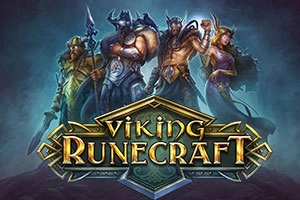

Viking Runecraft Slot Review
Viking Runecraft is the game where Play’n GO’s grid formula really came together. Released in April 2017, it fills a 7×7 board with carved rune stones, pays for clusters of five or more and charges a meter of destruction that unleashes four effects drawn from Norse myth. Four gods take turns beside the grid, each with a gift of Wilds, and everything builds towards Ragnarök: a single free round that ends with a total win multiplier of up to x15.
It is a high-volatility slot with a top prize of 5,000 times the bet. Most rounds are short, but the game is full of small events, and when Ragnarök lands it delivers one of the best climaxes in the genre.
Viking Runecraft key facts
| Feature | Details |
|---|---|
| Provider | Play’n GO |
| Release | 26 April 2017 |
| Layout | 7×7 grid, clusters of 5 or more, cascading |
| RTP | 96.71% (lower versions exist) |
| Volatility | High |
| Bet range | €0.10 to €100 per spin |
| Max win | 5,000x the bet |
| Features | Charge of Destruction effects, Gifts of the Gods, Ragnarök free round with up to x15, Runes of Valhalla wheel |
Runes, gods and a stormy north
The grid sits in a cold, stormy northern landscape, with Odin, Thor, Freya and Heimdall taking turns beside it. The symbols are rune stones, four high-paying and five low-paying, and there are four god Wilds that appear only through the gifts. When Ragnarök begins, the scene shifts to the end of the world.
Wins come from clusters of five or more matching runes connected horizontally or vertically. Winning runes are removed, new ones fall in, and cascades continue until no more wins form. All wins in a round add together.
A paytable built on big clusters
The paytable is very steep. The top rune pays five times the bet for a cluster of five, 75 times for ten or eleven, 250 times for twelve to fourteen and 1,000 times for fifteen or more. The lowest rune pays a fifth of the bet for five and ten times the bet for fifteen or more.
That shape defines the game. Small clusters keep the cascades going but return little. The real money is in large premium clusters, and the effects and Wilds exist largely to create them.
The Charge of Destruction
Every win during a round charges the meter of destruction. When it is full and the cascades have stopped, one of four effects fires:
- Fury of Fenrir slashes four diagonal lines across the grid. Two lines of runes are removed and the other two are transformed into another symbol.
- Judgment of Jörmungandr destroys a long path of runes from one edge of the grid to another, transforming several different runes along the way into a single symbol.
- Scorching of Surtr sets three runes ablaze. The fire can spread, burning runes are destroyed, and each burnt area leaves a core of identical new runes.
- Lure of Loki picks two different runes. One type is removed from the grid entirely, and the other type is transformed into another symbol.
After the effect, play continues and the meter can charge again. Each effect reshapes the board and can create several new clusters at once.
How the four effects differ in practice
The effects are not equal in what they do to the board, and knowing the difference makes rounds easier to follow. Fenrir and Jörmungandr are destructive: they clear large areas, which lets fresh runes fall in and can set off a new chain of cascades. Surtr is constructive: it burns away a patch and replaces it with cores of identical runes, so it directly builds clusters. Loki does both at once, wiping out one rune type entirely while converting another, which can merge several small groups of the converted rune into one large cluster.
None of them guarantees a win. A core of low runes in the corner or a converted symbol scattered across the board can fizzle. But in Ragnarök, where every effect plays once, the mix of clearing and building is what drives the End of the World meter towards its higher steps.
Two roads to Ragnarök
Ragnarök can be reached in two ways. The first is to fill the meter again after an effect has played: a second full charge in the same round triggers it. The second is to double charge the meter: once it is full, keep winning on enough additional runes before any effect fires, and Ragnarök starts directly. It can only be triggered once per round.
Ragnarök is a single free round, but a long one. Whenever the cascades stop, one of the Charge of Destruction effects plays. The round continues until all four effects have played once each and no more wins appear.
The End of the World meter
During Ragnarök, the normal meter is replaced by the End of the World bonus meter, which counts every winning symbol across the whole round. It awards a multiplier on the total win of the feature:
- 20 symbols: x2
- 40 symbols: x3
- 60 symbols: x5
- 80 symbols: x15
The jump from x5 to x15 is huge. A Ragnarök that reaches 80 winning symbols multiplies everything it has paid by fifteen, and that is the route to the game’s biggest results. A Ragnarök that stalls below 20 symbols pays only what its clusters were worth.
Gifts of the Gods
On rounds that do not produce a win, the active god can step in with a gift of Wilds:
- God of Thunder turns five to nine random runes into Wilds.
- God of Wisdom creates four Wilds in two vertical pairs.
- Goddess of Beauty creates Wild clusters inside the central 5×5 area, four at a time, until at least one win appears.
- God of Guarding creates seven Wilds, one in each row.
You meet the gods by clearing patterns: highlighted positions on the grid that you clear by winning on them. Each cleared pattern moves you to the next level and the next god. The gifts give blank spins a second chance and add variety, since each god’s Wilds work differently.
The Runes of Valhalla wheel
There is one more layer. Winning combinations of the rune stones also grow the Runes of Valhalla bonus, and each spin can collect up to five different rune combinations. If you have at least one collected and clear the current pattern, a wheel spins. Land on an active, lit rune and you win the accumulated bonus. The more symbols you have collected, the more runes are lit and the better your chance. The collection resets once the wheel has been played.
It is a side feature rather than the main event, but it gives pattern clearing a tangible reward.
How a big round unfolds
Picture a round that opens with a premium cluster and two smaller ones, filling the meter. Before any effect fires, a few more cascades push it into double charge, and Ragnarök begins at once. The first effect, Surtr, burns a patch of the grid and leaves cores of identical runes, creating new clusters. When those stop, Loki removes the most common low rune and converts another. The End of the World meter passes 40, then 60. Fenrir and Jörmungandr play their turns, and the count reaches 80, multiplying the entire Ragnarök total by fifteen.
That is the dream. Most rounds stop after one or two small clusters, and many Ragnarök rounds end at x2 or x3. The design makes the big ones possible but rare, which is exactly what high volatility means here.
Viking Runecraft RTP and volatility
The default RTP is 96.71%, with versions at 94.66%, 91.66%, 87.66% and 84.66% available to casinos. Check the game’s help screen before playing, as explained in our guide to slot RTP.
Play’n GO rates the volatility as high, 8 out of 10. The maximum win is 500,000 at the top stake of €100, or 5,000 times the bet. More on handling this kind of game is in our high-volatility slots guide.
Stakes and approach for Viking Runecraft
Bets run from €0.10 to €100 per spin.
- The meter resets each round, so the game needs many spins. Choose a stake you can sustain.
- Ragnarök is rare. Never raise your stake to chase it.
- God gifts on blank spins are welcome but do not change the odds of the next spin.
- Try the free demo above to learn the four effects before playing for money.
Viking Runecraft and its relatives
Viking Runecraft shares its 7×7 grid with Gemix, whose Crystal Charge and Super Charge are close relatives of its meter, and it paved the way for Reactoonz and Reactoonz 2. Of the three, Viking Runecraft has the most dramatic bonus, thanks to the End of the World multiplier.
For a Viking theme with traditional reels, Yggdrasil’s Vikings Go Berzerk offers rage meters and sticky Wilds instead. More from the studio is on our Play’n GO page.
Viking Runecraft pros and cons
What works:
- Four dramatic destruction effects
- Ragnarök with an End of the World multiplier up to x15
- God gifts and the Runes of Valhalla add plenty of variety
- 96.71% default RTP and a 5,000x top prize
What doesn’t:
- High volatility with many short rounds
- Ragnarök is hard to reach
- Many features to learn at the start
- Lower RTP versions exist at some casinos
Our verdict on Viking Runecraft
Viking Runecraft is a grid slot with a real sense of drama. The destruction effects make the board feel alive, the gods add variety, and Ragnarök with its End of the World multiplier is one of the most exciting bonus rounds Play’n GO has made. It asks for patience and a budget that can handle long dry spells. If you have both, it is still one of the studio’s best grid games.
Play only if you are 18+. Keep your play within limits and see our responsible gambling page for support.
Viking Runecraft questions answered

Popular Casinos
€3,625 Welcome Bonus + 350 Free Spins
€10,000 Welcome Bonus + 20% Cashback
€10,000 Welcome Bonus + 20% Cashback
€3,500 Welcome Bonus + 20% Cashback
€10,000 Welcome Bonus + 20% Cashback
Get €5,000 Casino Bonus + 300 Free Spins
€1,850 Welcome Bonus + 500 Free Spins
€5,000 Welcome Bonus + 300 Free Spins
500% Welcome Pack + 400 Free Spins
250% Welcome Bonus + 250 Free Spins
